

Keyhole (Arthroscopic) Surgery in Singapore
Dr Bryan Wang
Consultant Orthopaedic Surgeon
Trusted Orthopaedic Surgeon | Fellowship-trained in Canada With over 20 yrs of experience
Keyhole or arthroscopic surgery is a minimally invasive technique where an orthopaedic surgeon uses a small camera and specialised instruments through tiny incisions to diagnose and repair joint problems. It is commonly used to treat various condition of the knee, shoulder or elbow joints. The benefits of keyhole surgery are smaller scars, faster recovery, less pain and earlier return to work or sports.
What is Keyhole (Arthroscopic) Surgery and When is it Recommended?
Keyhole, or arthroscopic surgery, allows orthopaedic surgeons to see inside a joint using a tiny camera (arthroscope) connected to a high-definition monitor. Through 2-3 small incisions, your surgeon can diagnose and treat soft-tissue or cartilage injuries without large open cuts.
It usually recommended when symptoms / pain persists that may prompt surgical consideration or when conservative options fail. In regard to body joints, a Keyhole surgery is routinely performed on:
Keyhole surgery is preferred over open surgery for various beneficial reasons.
✅ It is minimally invasive - Small cuts (~5–10 mm) are made to insert the arthroscope thus preserving muscle and tissue.
✅ Less pain and swelling - The surrounding area has reduced inflammation as compared to open surgery.
✅ Faster recovery - It is often done as a day surgery thus reducing length of stay at the hospital and resumption of quicker rehabilitation.
✅ Precise diagnosis - High-resolution arthroscopic camera visualises cartilage, ligaments, and tendons.
✅ Lower infection risk - As the incision is very small, there is only a small wound with minimal scarring thus reducing risk of infection.
Why Choose Keyhole Surgery?
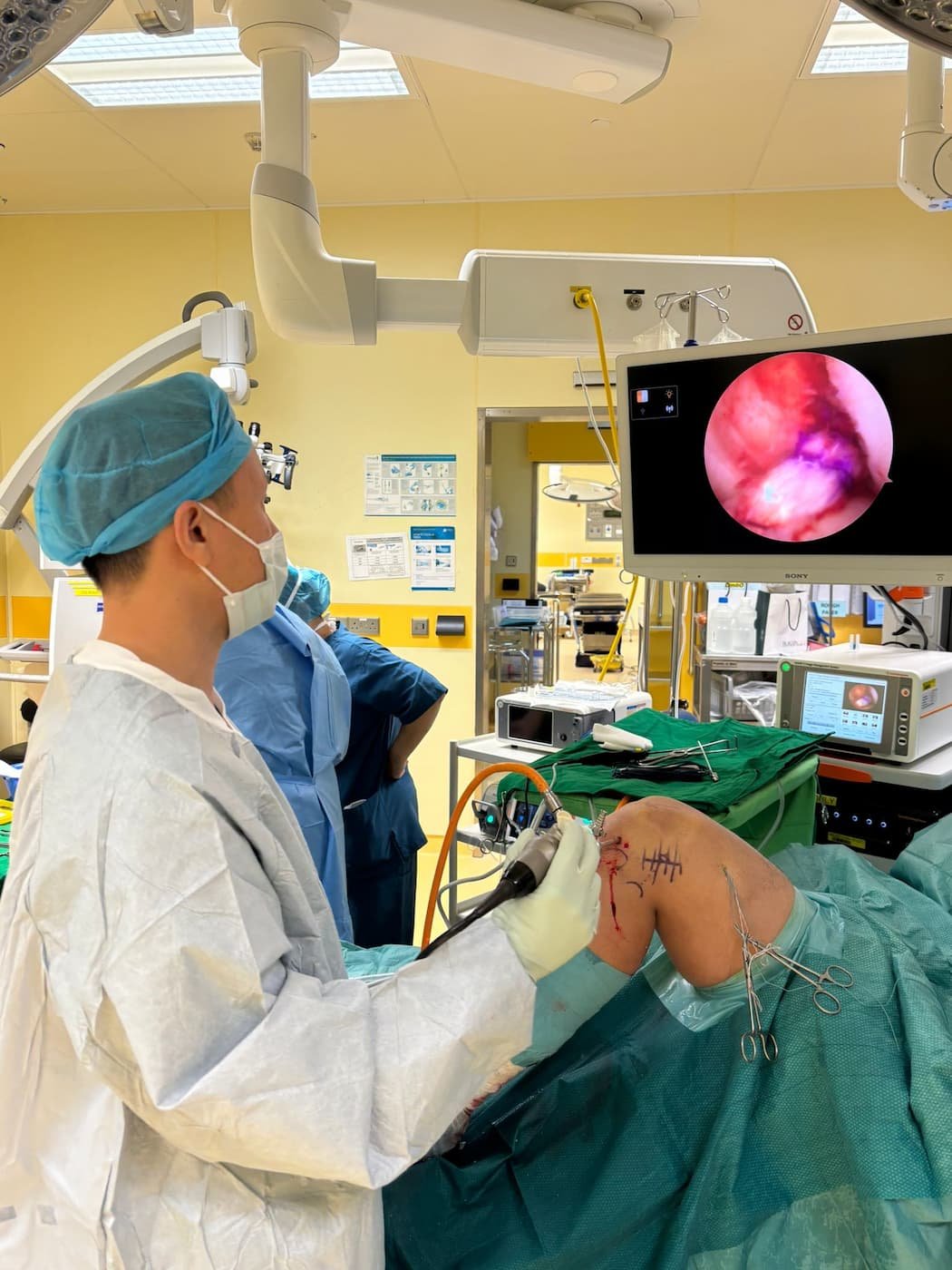
Common Conditions Treated with Arthroscopic (Keyhole) Surgery
Labral tears
Shoulder instability / Dislocations
Rotator cuff tear or impingement
Frozen shoulder (Adhesive Capsulitis)
Calcific tendonitis
Meniscus tear
Anterior/Posterior Cruciate Ligament (ACL/PCL) tears
Chondral injury or cartilage flap
Early knee osteoarthritis
Loose bodies or synovitis
Baker’s cyst
Loose bodies or bone spurs
Tennis/ golfer’s elbow
Post-traumatic stiffness or locking
Knee Conditions
Meniscus tear (C-shaped cartilage acting as shock absorber): The meniscus cushions your knee joint and distributes weight evenly. Tears from twisting or sports injuries can cause pain, swelling or locking. Arthroscopy trims or repairs the torn segment through tiny incisions to restore smooth movement and prevent early arthritis. It may take 3-6 weeks to return to normal walking.
Anterior/Posterior Cruciate Ligament (ACL/PCL) tears: These central knee ligaments stabilise forward and backward motion. A torn ACL or PCL causes instability, giving-way episodes, and reduced sports performance. Arthroscopic ligament reconstruction using grafts rebuilds stability and protects the joint from further damage. It may take 6-9 months to return to sports.
Chondral injury or cartilage flap: Cartilage damage on the femur or tibia surface leads to painful “catching” or grinding. Arthroscopy smoothens or reattaches cartilage and sometimes uses microfracture techniques to stimulate healing.
Early knee osteoarthritis: In mild arthritis with localised cartilage damage, arthroscopy removes loose tissue (debridement) or creates small holes (microfracture) to stimulate new cartilage growth, easing symptoms and improving motion. May take about 2-4 weeks to reduce pain.
Loose bodies or synovitis: Small bone or cartilage fragments can float inside the joint, causing sudden locking or swelling. Arthroscopy allows precise removal and treatment of inflamed joint lining (synovectomy). Typical recovery may take 2-4 weeks.
Baker’s cyst: A Baker’s cyst forms when fluid builds up behind the knee due to underlying joint irritation. Arthroscopy addresses the root cause (e.g., meniscus tear or inflammation) to reduce recurrence. Recovery period may be 4-6 weeks depending on the cause of the cyst.
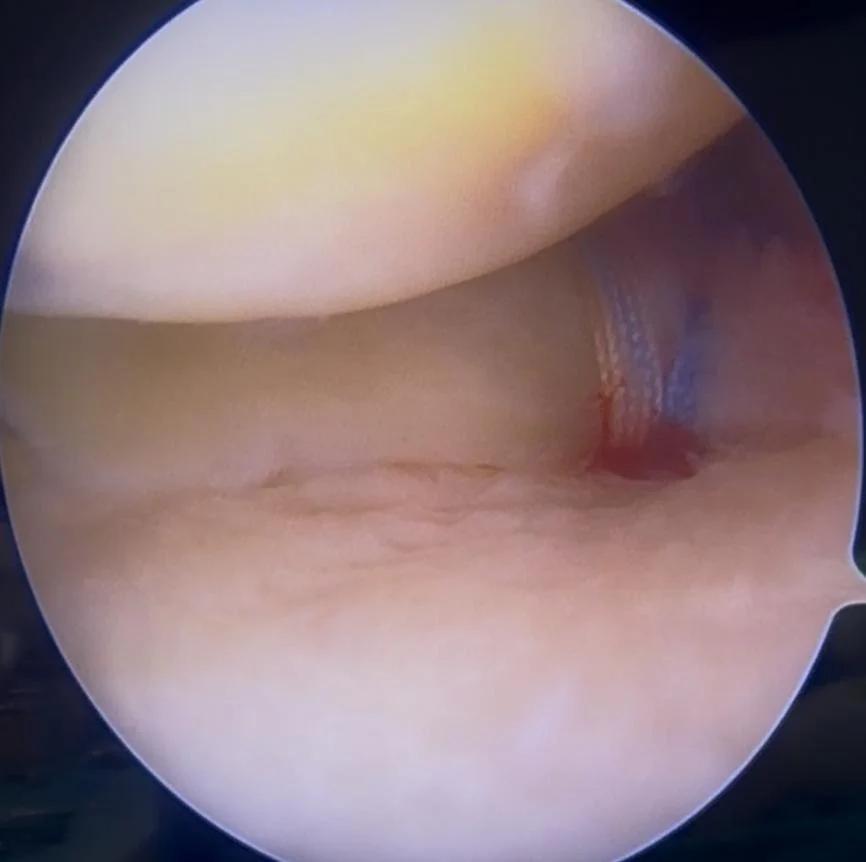
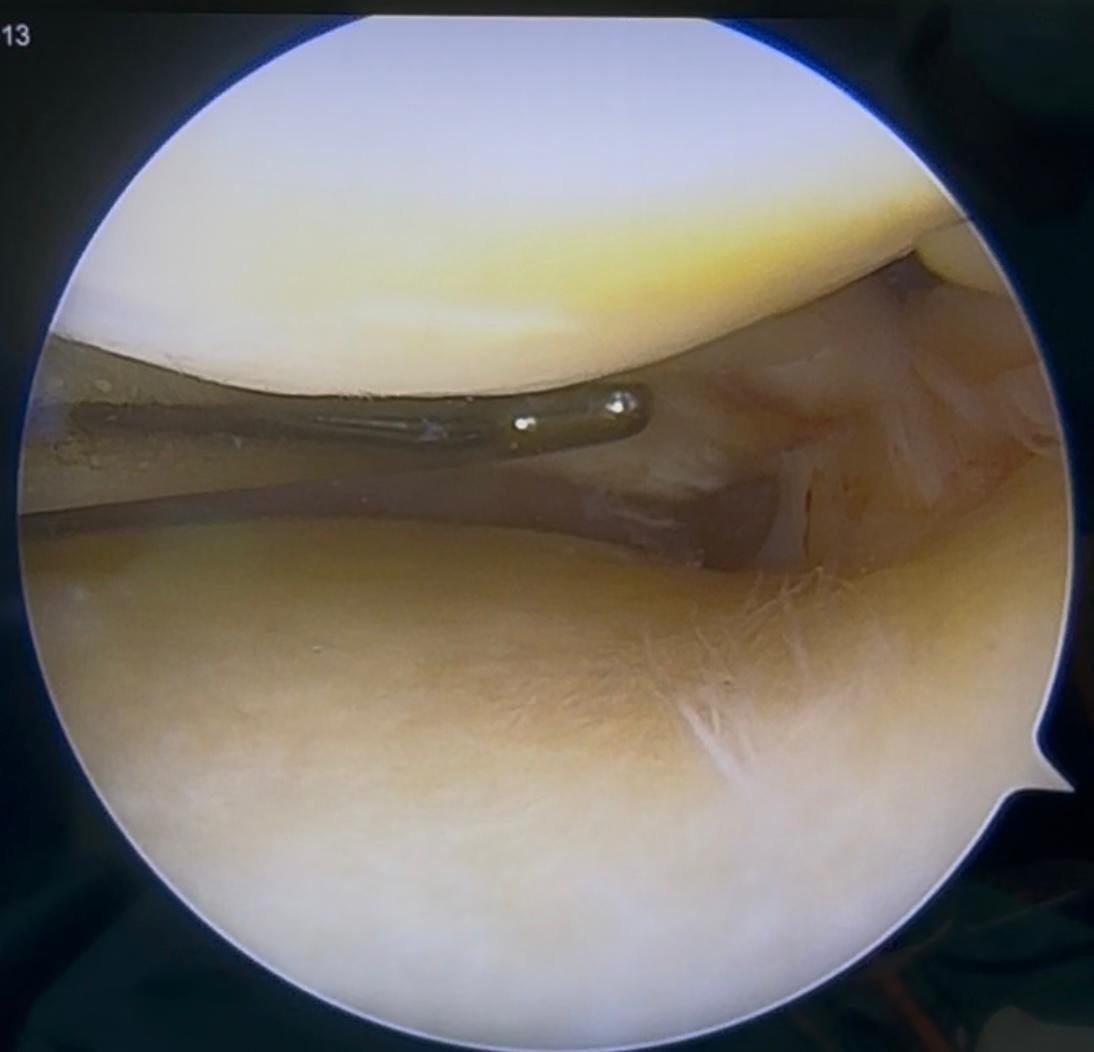
Arthroscopic view of Dr Bryan’s meniscus root repair
Shoulder Conditions
Labral tears (SLAP, Bankart, reverse Bankart): The labrum deepens the shoulder socket. Tears from trauma or repetitive overhead use cause pain, clicking, and instability. Arthroscopic repair reattaches the torn rim and stabilises the joint. It may take about 4-6 months to return to premorbid level.
Shoulder instability / dislocations: Recurrent shoulder dislocations stretch or tear stabilising structures like the capsule and labrum. Arthroscopic stabilisation using keyhole surgery (e.g., Bankart repair, remplissage) restores the capsule-labrum complex for long-term stability. It may take about 4-6 months to return to premorbid level.
Rotator cuff tear or impingement: The rotator cuff tendons control shoulder strength and motion. These tendons can tear or fray due to overuse or ageing and thus cause night pain and weakness. Arthroscopy removes inflamed tissue or reattaches torn tendons to restore strength and pain-free movement. The recovery period may be 3-6 months.
Frozen shoulder (Adhesive Capsulitis): Scarred capsule tissue limits shoulder movement and causes frozen shoulder. Keyhole arthroscopic surgery gently cuts tight bands, improving range of motion and relieving stiffness. Recovery period is about 4-8 weeks
Calcific tendonitis: Calcium deposits form within the rotator cuff, causing sharp pain with arm elevation. Arthroscopic removal of the deposits provides rapid relief and restores mobility. Recovery period may be about 3-6 weeks.
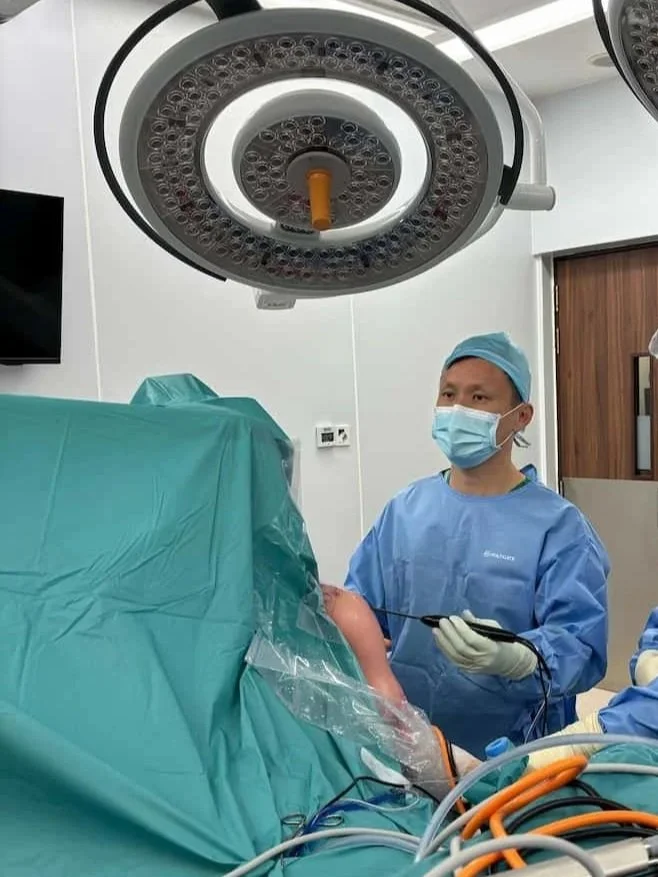
Dr Bryan performing shoulder keyhole surgery
Elbow Conditions
Loose bodies or bone spurs: After an injury or arthritis, small bone or cartilage fragments can lodge inside the elbow joint, restricting motion. Keyhole surgery removes them through small portals to restore smooth motion. Recovery timeline is about 3-6 weeks.
Tennis/ golfer’s elbow: Chronic tendon degeneration from repetitive strain may need surgical cleaning (debridement) via keyhole approach when non-surgical care fails. Recovery may take 4-8 weeks.
Post-traumatic stiffness or locking: After elbow fractures or dislocations, scar tissue and bone overgrowth limit elbow extension. Arthroscopic release improves range and function with minimal trauma to surrounding tissues. It may take 6-12 weeks to restore normal function.
*Timelines of the above injuries may vary by injury severity and rehabilitation progress.
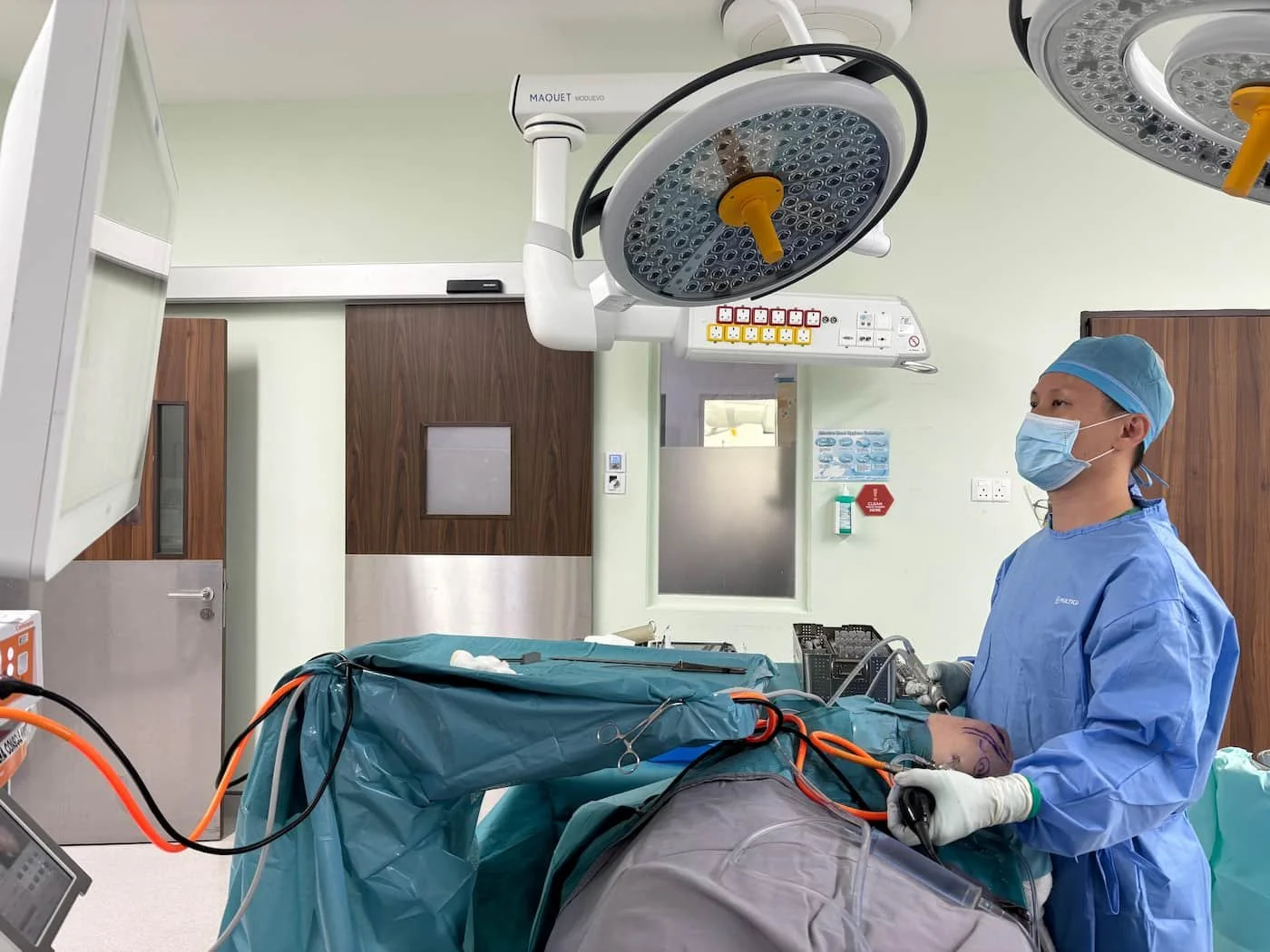
Dr Bryan performing elbow keyhole surgery
Who is Suitable for Keyhole surgery?
Keyhole surgery is suitable for individuals whose joint pain or mobility issues do not improve with conservative treatment such as physiotherapy, medication, or activity modification.
You may be a good candidate for arthroscopy if:
You have persistent pain or swelling in the knee, shoulder, or elbow.
Imaging (e.g. MRI or X-ray) shows cartilage, ligament, or soft-tissue damage.
You experience mechanical symptoms — locking, catching, or instability at the knee, shoulder or elbow joint.
You wish to return to sports or active lifestyle as soon as you can.
Your joint condition is not severe enough to require open or joint-replacement surgery.
You may NOT be a good candidate for arthroscopy if:
You have advanced arthritis (where open or replacement surgery may offer better outcomes).
You have certain medical conditions that limit wound healing.
Your orthopaedic surgeon will evaluate your condition, imaging results, and activity goals to determine if keyhole surgery is right for you.
What to Expect if You Are Scheduled for Keyhole Surgery?
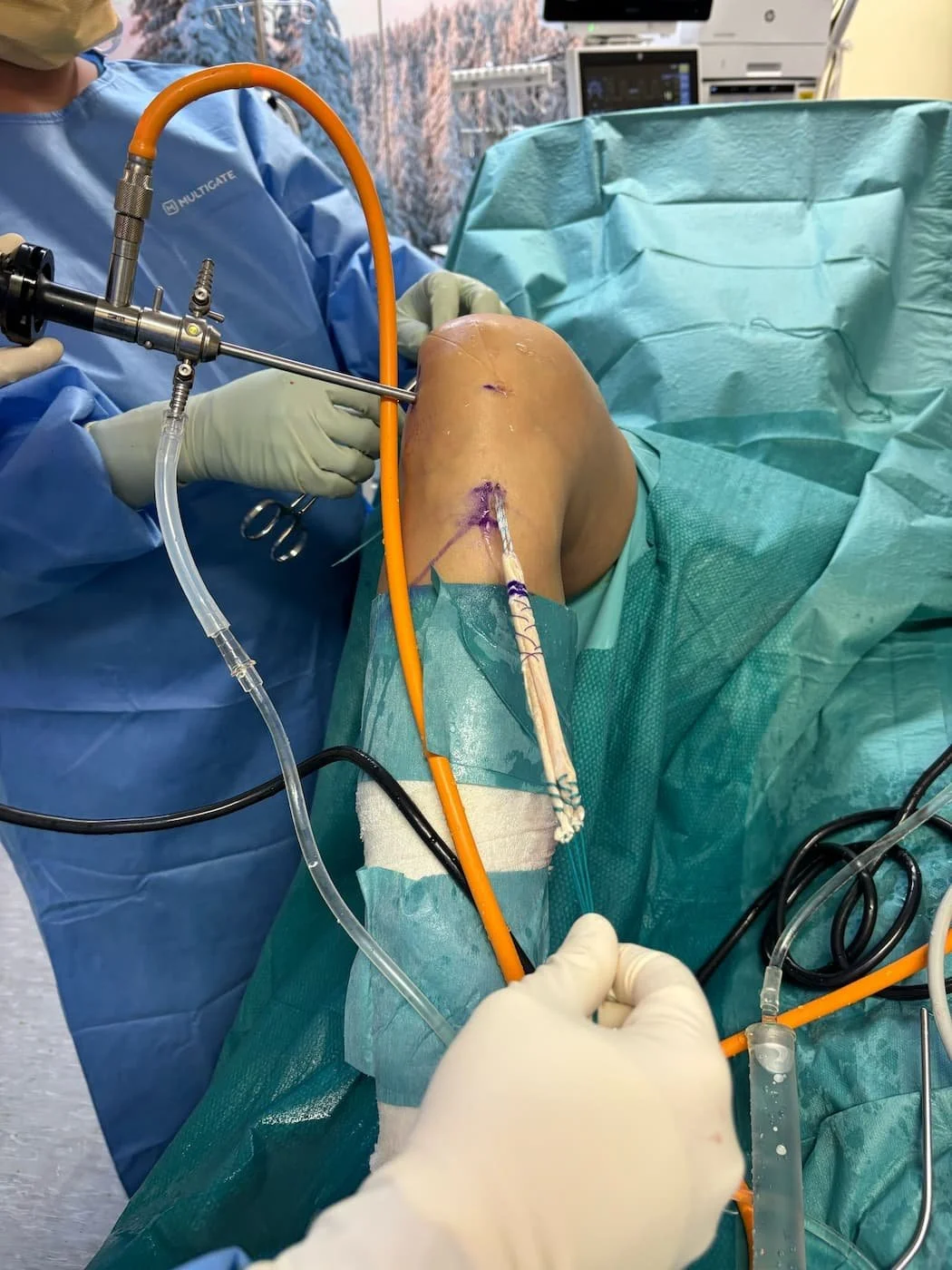
Dr Bryan performing ACL reconstruction surgery
At Beacon Orthopaedics, we ensure a smooth and supportive surgical experience from your first consultation to full recovery.
Step 1: Consultation & Diagnosis
Our orthopaedic surgeon will do a comprehensive assessment.
Review of your symptoms, medical history and a thorough physical examination is performed.
There will be on-site X-ray and MRI scanning for accurate diagnosis.
Step 2: Pre-Surgery Preparation
Your surgeon explains the procedure, recovery plan and expected outcomes.
Pre-operative health checks ensure safety for anaesthesia.
You’ll receive instructions on fasting, medication, and transport.
Step 3: Day of Surgery
Surgery may be performed under general or regional anaesthesia.
Surgery usually takes 30–90 minutes, depending on complexity.
You may expect to go home on the same day if no complications arise.
Step 4: Post-Surgery Care
You’ll rest in recovery for a few hours and receive wound-care guidance.
Mild discomfort or swelling is expected for a few days over the wound area.
Pain relief and antibiotics may be prescribed.
Step 5: Physiotherapy & Follow-Up
Our partner physiotherapists will craft out a structured and individualised rehabilitation plan for you.
Follow-up appointments will be scheduled to track healing and progress.
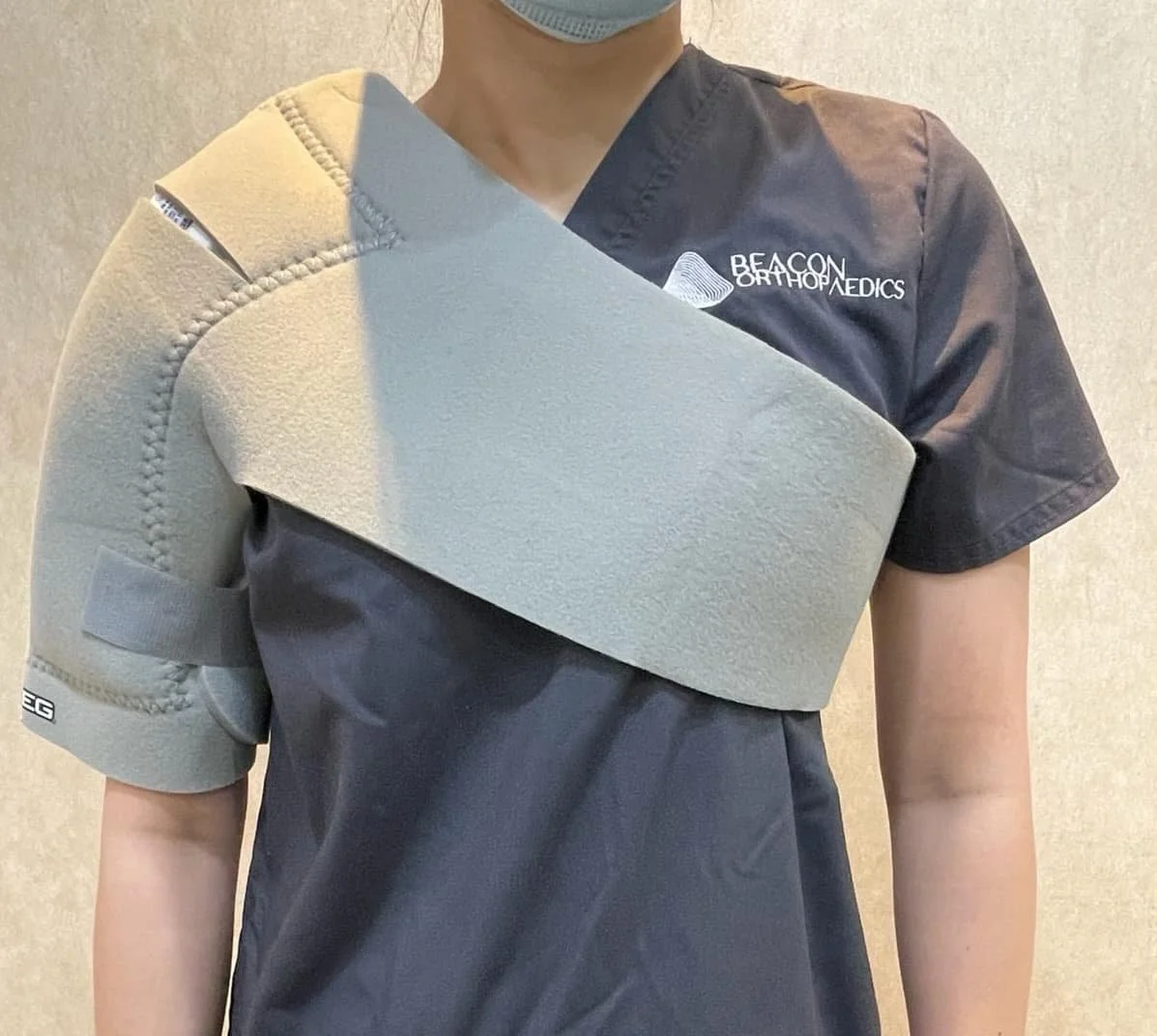
Post-surgery care with cold wrap over the operated shoulder
What Happens During Arthroscopic (Keyhole) Surgery Procedure?
Arthroscopy uses advanced imaging and precision tools to treat joint problems with minimal trauma. You may expect the following procedure:
You will be asleep, or your limb is numbed during the procedure.
Small incisions (2–3 tiny portals) are made around the affected joint.
A camera (arthroscope) is inserted to view the affected internal structures on a monitor.
Mini instruments are then used to repair or remove damaged tissue. Some of the common procedures are trimming of the meniscus, ligament reconstruction and labral repair.
The small incisions are then closed with a few stitches.
Dressing of the wound may be done with sterile bandages to facilitate healing.
If no other issues persist, patients may go home on the same day.
Typical Duration for a Keyhole Surgery
Knee arthroscopy: 45–60 minutes
Shoulder arthroscopy: 60–90 minutes
Elbow arthroscopy: 30–60 minutes
Advantages of Keyhole Surgery Vs. Open Surgery
Keyhole Surgery
Traditional Open Surgery
Incision - 5-10mm
Tissue disruption - Minimal
Pain and swelling - Lesser
Recovery time - Weeks
Infection risk - Lower
Cosmetic outcome - Tiny Scars
Incision - 5-10cm
Tissue Disruption - More muscle/tendon splitting
Pain & Swelling - Higher
Recovery Time - Months
Infection Risk - Higher
Cosmetic Outcome - Larger Scars
✅ Thus, keyhole surgery is the treatment of choice when indicated.
What are the Risks & Complications of a Keyhole Surgery?
Arthroscopy is generally safe and has a low complication rate, especially when performed by experienced orthopaedic surgeons. However, as with any surgery, there are potential risks.
Common and Mild Risks
Temporary pain, stiffness, or swelling
Bruising around incision sites
Minor bleeding or fluid leakage
Less Common but Possible Risks
Infection at incision site (rare)
Blood clots (deep vein thrombosis, very rare)
Nerve or blood vessel injury near the joint
Joint stiffness or formation of scar tissue
Anaesthesia-related side effects such as nausea or dizziness

How Beacon Orthopaedics Minimises Risks
We have strict sterile technique and surgical protocols
We use State-of-the-art arthroscopy equipment
Our specialist surgeon is well trained in complex joint procedures
We encourage early physiotherapy to reduce stiffness and prevent complications
Thus, majority of our patients recover smoothly and experience long-term improvement in pain and mobility.
Recovery & Rehabilitation Pathway Post Keyhole Surgery
Once keyhole surgery is the treatment of choice, you may expect the following recovery and rehabilitation pathway:
Day-surgery procedures under general or regional anaesthesia.
Discharge with detailed physiotherapy protocol and sling/crutches if required.
Early passive motion to prevent stiffness.
Progressive exercises/ strengthening under guidance of Beacon’s partner sports physiotherapists
Return to Desk work: 1–2 weeks; Driving: 2–3 weeks (depending on the site of the surgery); Recreational sports: usually 3–6 months
Rehabilitation duration may vary according to the joint involved in the surgery.


Why Choose Beacon Orthopaedics
Specialist-led care: Dr Bryan Wang is fellowship-trained in Shoulder & Elbow and Sports Injuries (Pan Am Clinic, Canada) and previously served as Senior Consultant (CGH). He has taught at NUS, NTU, and Duke-NUS and is a member of AAOS, ISAKOS, and the Canadian Shoulder & Elbow Society.
Sports-Specific rehabilitation: Our individualised plans are tailored for both weekend warriors and professional athletes alike.
Integrated pathway: You can expect same-week imaging, surgery and onsite/partner physiotherapy with clear return to work/ sports patient centred goals.
Personalised treatment: We know that each patient is unique. Hence a clear and personalised discussion on options, goals, and realistic recovery expectations are done with you.
Frequently Asked Questions
-
Keyhole (arthroscopic) surgery uses a camera and instruments through small incisions instead of a large open cut, resulting in faster recovery and less pain.
-
Most patients experience mild post-operative discomfort managed with oral painkillers. Pain is significantly lower than traditional open surgery.
-
Walking often resumes within 1–2 weeks. Full sports recovery may take 3–6 months depending on the procedure and physiotherapy.
-
Yes. Physiotherapy is crucial to restore range, strength, and prevent stiffness—especially after ACL or shoulder labral repair.
-
Usually yes, but some minor arthroscopies use regional (nerve block) anaesthesia for comfort and faster recovery.
-
If pain or instability persists beyond 2–3 weeks after an injury or if imaging suggests meniscus, ACL, or labral tears, early review avoids worsening of the condition.
-
Yes, most procedures are day surgeries. You’ll be discharged with post-operative instructions and a follow-up review within 1 week.
-
Yes—arthroscopy can be performed safely in older patients for cartilage cleaning, loose body removal, or rotator cuff repair, when indicated.
Medically reviewed by: Dr Bryan Wang, Consultant Orthopaedic Surgeon, Beacon Orthopaedics, Singapore
Fellowship-trained (Pan Am Clinic, Canada) | Former Senior Consultant, CGH | Teaching faculty at NUS, NTU, and Duke-NUS | Member of AAOS, ISAKOS, and Canadian Shoulder & Elbow Society.
Last reviewed: January 2026
Educational content only; not a substitute for personal medical advice. For a diagnosis and tailored plan in Singapore, book an appointment with our team.
References
Beacon Orthopaedics – About Dr Bryan Wang https://www.beaconortho.com.sg/about-dr-bryan-wang
Keyhole Surgery- About meniscal repair https://www.physio-pedia.com/Meniscal_Repair
AAOS OrthoInfo- Elbow arthroscopy educational content https://orthoinfo.aaos.org/en/treatment/elbow-arthroscopy/
AAOS OrthoInfo- Knee arthroscopy educational content https://orthoinfo.aaos.org/en/treatment/knee-arthroscopy/